Module 6: Structure and Nomenclature of Alcohols and Ethers
Module 6: Structure and Nomenclature of Alcohols and Ethers
Questions Q-164 – Q-204 | Study Sections S-37 – S-44
Card 1 of 50
✓ Correct: 0✗ Wrong: 00 of 50 answered
📚 Study Section S-37
A primary alcohol has at least two hydrogens attached to the alcohol carbon (R–CH2–OH); a secondary alcohol has only one hydrogen attached to the alcohol carbon (R2CH–OH); a tertiary alcohol has no hydrogens attached to the alcohol carbon (R3C–OH).
Q-164
Give the structure of the simplest primary alcohol.
A-164
CH3OH
Q-165
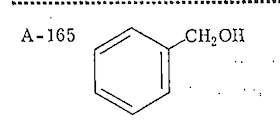
Give the structure of the simplest primary alcohol containing a phenyl group.
A-165
Q-166
Give the structure of the simplest secondary alcohol.
A-166
H3C–CH(OH)–CH3
Q-167
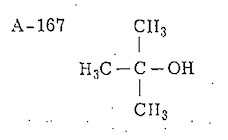
Give the structure of the simplest tertiary alcohol.
A-167
Q-168
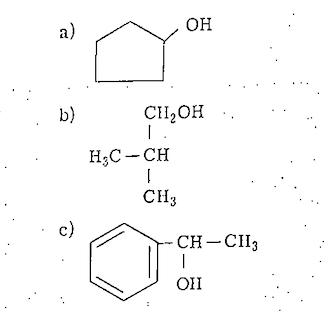
Classify each as to type of alcohol.
A-168
a) Secondary b) Primary c) Secondary
📚 Study Section S-38
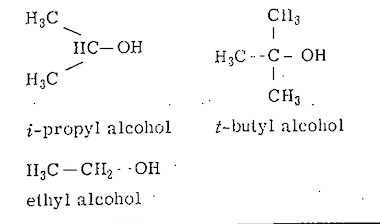
The simpler alcohols are commonly known by their trivial (common) names obtained by adding the word alcohol to the name of the alkyl radical; for example:
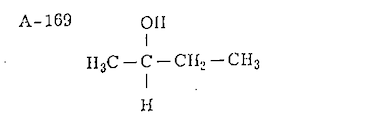
Q-169
Give the structure of: sec-butyl alcohol
A-169
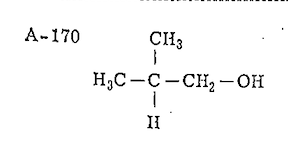
Q-170
Give the structure of: i-butyl alcohol
A-170
Q-171
Give the structure of: methyl alcohol
A-171
CH3–OH
Q-172
Give the structure of: t-butyl alcohol
A-172
(CH3)3C–OH
Q-173
Give the structure of: i-propyl alcohol
A-173
(CH3)2CH–OH
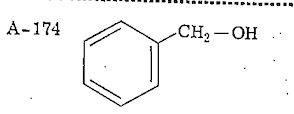
Q-174
Give the structure of: benzyl alcohol
A-174
Q-175
Give the structure of: propargyl alcohol
A-175
HC≡C–CH2–OH
Q-176
Give the structure of: allyl alcohol
A-176
H2C=CH–CH2–OH
📚 Study Section S-39
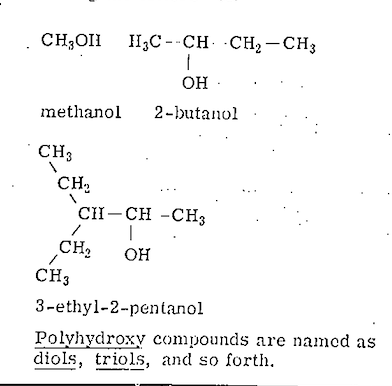
By the I.U.C. method, the longest carbon chain containing the –OH group is chosen as the base. The suffix of the hydrocarbon name is changed from –ane to –anol and when necessary the position is indicated by number preceding the letters –ol. Polyhydroxy compounds are named as diols, triols, and so forth.
Q-177
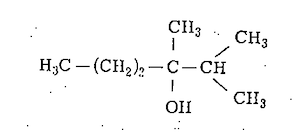
Give a suitable name for:
A-177
2,3-dimethyl-3-hexanol
Q-178
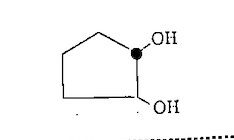
Give a suitable name for:
A-178
trans-1,2-cyclopentanediol or trans-cyclopentane-1,2-diol
Q-179
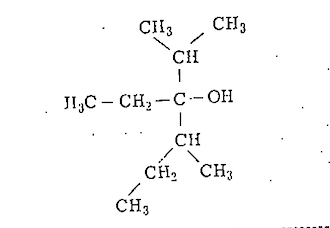
Give a suitable name for:
A-179
2,4-dimethyl-3-ethyl-3-hexanol
Q-180
Give a suitable name for: H2C=CH–CH2–OH
A-180
Allyl alcohol or 1-propen-3-ol
Q-181
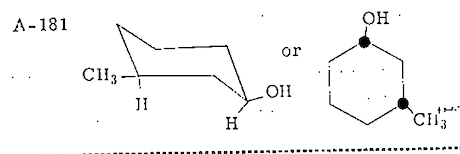
Give the structure of: cis-3-methylcyclohexanol
A-181
Q-182
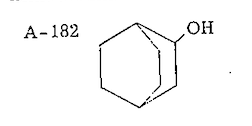
Give the structure of: bicyclo[2,2,2]-2-octanol
A-182
Q-183
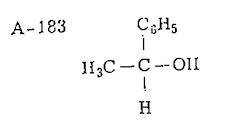
Give the structure of: α-phenylethanol
A-183
Q-184
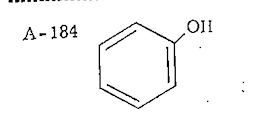
Give the structure of: phenol
A-184
Q-185
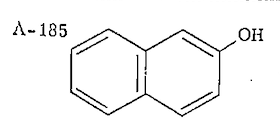
Give the structure of: β-naphthol
A-185
📚 Study Section S-40
In more complex molecules where the parent name is not that of an alcohol, the –OH group and its position are indicated by a prefixed number and the radical name hydroxy; or the suffix –ol; for example:
Q-186
Give a suitable name for: H3C–CH=CH–CH2–OH
A-186
2-butene-1-ol or 1-hydroxy-2-butene or crotyl alcohol
Q-187
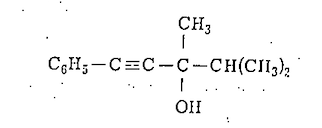
Give a suitable name for:
A-187
1-phenyl-3,4-dimethyl-1-pentyne-3-ol or 1-phenyl-3-hydroxy-3,4-dimethyl-1-pentyne
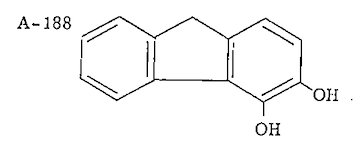
Q-188
Give the structure for: 3,4-dihydroxy-fluorene
A-188
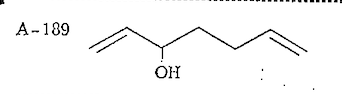
Q-189
Give the structure for: 3-hydroxy-1,6-heptadiene
A-189
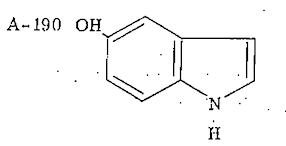
Q-190
Give the structure for: 5-hydroxyindole
A-190
📚 Study Section S-41
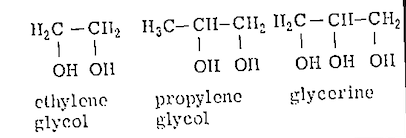
Compounds containing two alcohol radicals are known as diols (or glycols); those containing three radicals are known as triols. Some common names are:
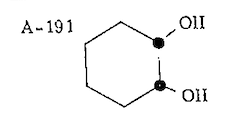
Q-191
Give the structure of: cis-cyclohexene glycol
A-191
Q-192
Give the structure of: glycerol
A-193
HOCH2–CH(OH)–CH2OH
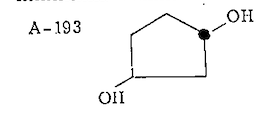
Q-193
Give the structure for: trans-cyclopentane-1,3-diol
A-193
📚 Study Section S-42
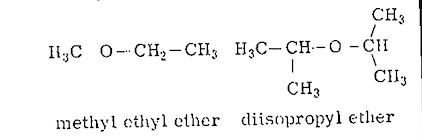
Ethers (R–O–R) are named in two ways. Ethers containing symmetrical or simple alkyl radicals are named by giving the alkyl radical names and adding the word ether; for example:
Q-194
Give a suitable name for: H2C=CH–CH2–O–CH2–CH=CH2
A-194
Diallyl ether or allyl ether
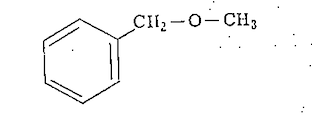
Q-195
Give a suitable name for:
A-195
Methyl benzyl ether
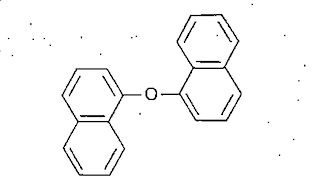
Q-196
Give a suitable name for:
A-196
Di-α-naphthyl ether
Q-197
Give a suitable name for: ClCH2–CH2–O–CH2–CH2Cl
A-197
Di-β-chloroethyl ether or β-chloroethyl ether or β,β′-dichloro-diethyl ether
📚 Study Section S-43
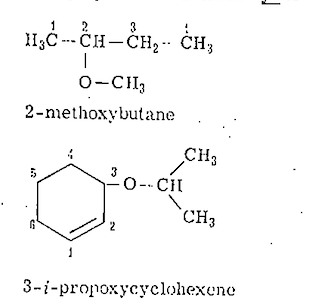
By the I.U.C. system the ether is considered as a hydrocarbon group with a single hydrogen replaced by an alkoxy group. The name of the longest chain hydrocarbon is prefixed with the numbered position and name of the alkoxy group. The alkoxy group is named as the hydrocarbon radical name by changing the suffix from –yl to –oxy.
Q-198
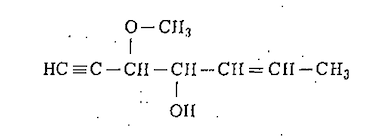
Give a suitable name for:
A-198
3-methoxy-4-hydroxy-5-heptene-1-yne or 3-methoxy-5-heptene-1-yne-3-ol
Q-199
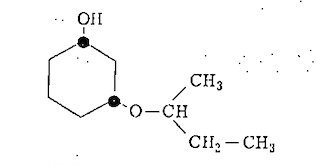
Give a suitable name for:
A-199
cis-3-sec-butoxycyclohexanol
Q-200
Give a suitable name for: H3C–O–CH2–CH2–O–CH3
A-200
1,2-dimethoxyethane
📚 Study Section S-44
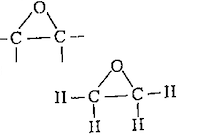
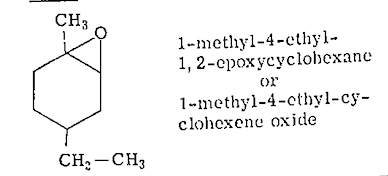
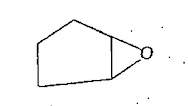
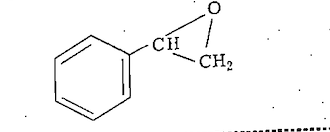
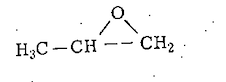
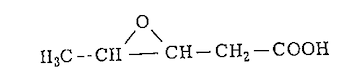
Epoxides are compounds containing the ring –C–O–C–. The simplest is ethylene oxide (named as the alkene precursor + oxide). In more complex compounds the group is given prefix numbers and the name epoxy.
Q-201
Give a suitable name for:
A-201
Cyclopentene oxide
Q-202
Give a suitable name for:
A-202
Styrene oxide
Q-203
Give a suitable name for:
A-203
Propylene oxide or 1,2-epoxypropane
Q-204
Give a suitable name for:
A-204
3,4-epoxypentanoic acid
🎉
Module Complete!
You have completed Module 6: Structure and Nomenclature of Alcohols and Ethers